ServicesReverse Osmosis
Reverse Osmosis in Pewaukee
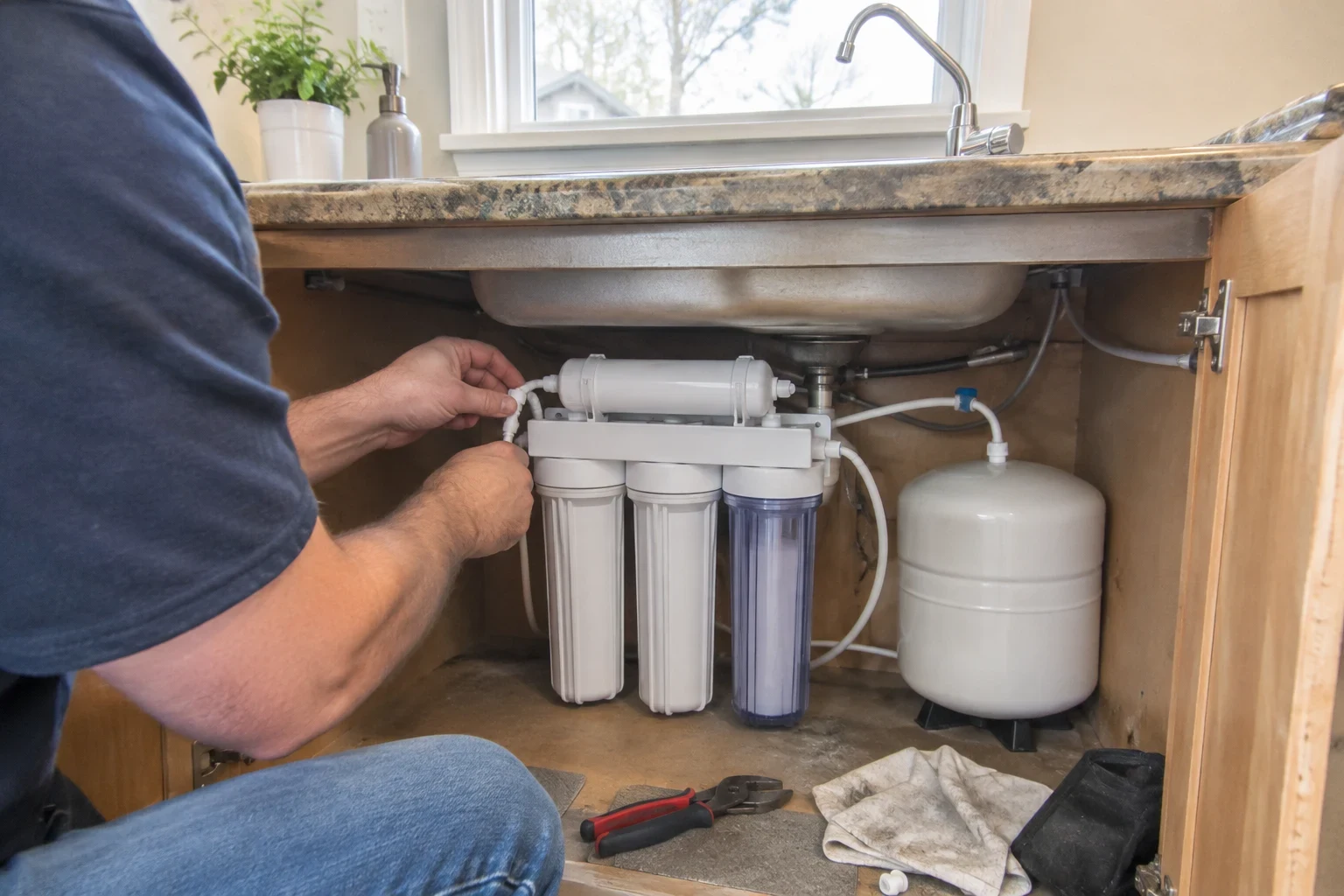
A reverse osmosis system adds a separate faucet at your kitchen sink for drinking water, coffee and cooking. Before anything is mounted, we check the cold-water shutoff, the drain and the cabinet space in your home, because older kitchens seldom match the diagram printed on the box.
How reverse osmosis works and who it suits
Your own water pressure pushes tap water through a tightly wound membrane. Most dissolved minerals, metals like lead and many of the compounds that cause an off taste are held back and flushed to the drain. Ahead of the membrane, a carbon prefilter strips out chlorine so the membrane lasts. Treated water waits in a small storage tank and comes out of its own faucet next to your kitchen sink.
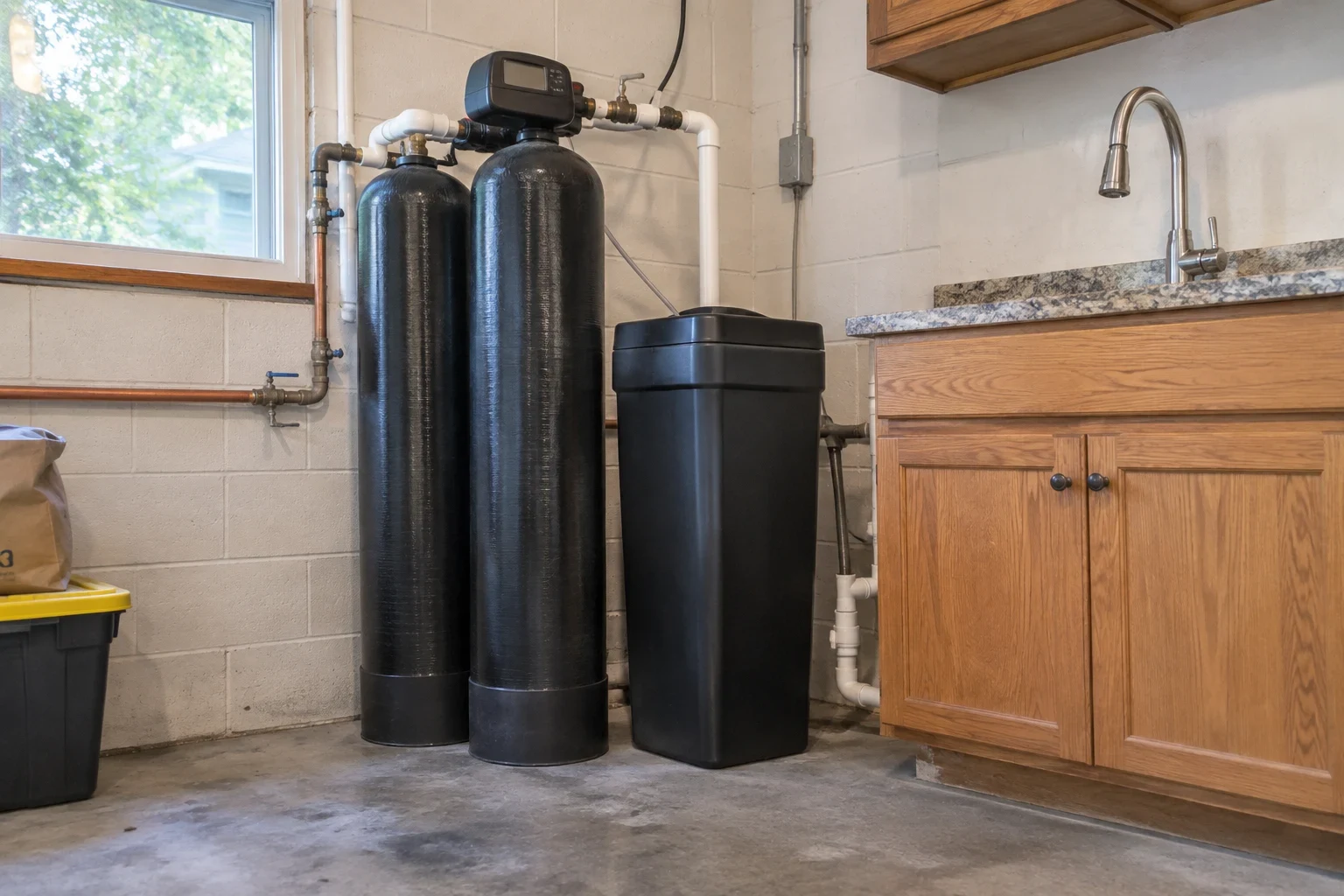
RO is a good pick if the glass of water and the pot on the stove are what you care about most. If scale on every fixture or a smell in the shower is the bigger bother, a water softener or whole-home filtration treats everything coming into your home. An RO unit can work alongside either one.
Older houses bring their own wrinkles. Lead solder in copper joints, a stretch of galvanized pipe that was never swapped out, or an old repair hidden at the back of the cabinet can change both the water at the tap and how the install goes. We build the plan from what we actually find under your sink, not from what ought to be there.
What your RO installation includes
- A system matched to your household
- We size the tank and daily output to how many people drink from it, and to extras like a refrigerator or ice maker line if you want one connected.
- A sound cold-water connection
- Plenty of kitchens still have stiff multi-turn shutoffs or saddle valves left from an earlier job. If yours won't hold, we tell you before we tap in and include a replacement in the quote.
- A proper drain hookup
- RO sends a small stream of rinse water to the drain. We mount the drain fitting above the trap so it can't siphon back, and we check for loose slip joints or old buildup in the drain line first.
- A dedicated faucet
- If your sink has a spare hole from a sprayer or soap pump, the RO faucet goes there. If not, we drill a new one in the counter. Stone and older tile call for different bits and more care, and we explain that up front.
- Startup and a walkthrough
- We flush the new filters, check every connection for leaks and show you how filter changes work and when they come due.
Signs an RO system makes sense for you
Your house has its original plumbing
Homes plumbed before lead solder was banned in 1986 can have it in their copper joints. RO is one of the most reliable ways to reduce lead at the tap you drink from.
You buy bottled water by the case
If the jugs and cases keep piling up, an RO faucet gives you the same kind of water without the hauling or the plastic.
Coffee, tea and ice taste off
Chlorine and dissolved minerals show up first in drinks. Filtered water usually makes a clear difference in the cup.
Spots on glasses and kettles
Hard water is common around Pewaukee, and it leaves white residue. RO removes those minerals from your drinking water, and a water softener can handle the rest of your home.
You're on a private well
RO works well as the last step at the kitchen sink after well water treatment handles iron, sediment or odor at the pressure tank.
What affects the price of an RO system
Your quote is written out line by line so you can see where the money goes. The system is only part of the price; in a house that's been around a while, the condition of the plumbing it connects to matters just as much. Financing is available through U.S. Bank Avvance, on approved credit.
System design
A basic multi-stage unit with a storage tank is priced differently from a tankless design. Adding a remineralization cartridge, which puts a little calcium and magnesium back for taste, also changes the number.
Faucet and countertop
Using an existing hole is simple. Drilling quartz, granite or aging ceramic tile takes more time and different tools.
Plumbing under the sink
A seized shutoff, a corroded supply line or a drain that needs rework adds parts and labor. We point these out before work begins.
Extra connections
Running a line to your refrigerator or ice maker, or adding a pump for low pressure, increases the scope.
How the work goes, start to finish
- 1
A phone conversation
Tell us about your kitchen, the age of your house and what bothers you about the water. We explain the options and give you a free quote along with financing information. The quote holds for 30 days.
- 2
A close look under the sink
Before we start, we check water pressure, the shutoff valve, the drain and the cabinet space. RO needs steady pressure, and some older homes run low; if a permeate pump or booster would help, we tell you and confirm any change before going ahead.
- 3
Installation
Drop cloths go down first, inside the cabinet and on the kitchen floor in front of it. Then the filter housings and tank are mounted, the tubing is run and the faucet is set. Most installs fit within a single visit.
- 4
Flush, check and clean up
We run the system, look for drips at every fitting and take away packaging and old parts. Full payment is due at the completion of the install, once you've seen it working.
Reverse osmosis questions we hear often
Does reverse osmosis waste a lot of water?
Every RO system sends some rinse water to the drain while it makes treated water. How much depends on the design and your water pressure. Newer systems and permeate pumps cut that amount noticeably, and we go over it for the specific system we recommend.
Will RO take care of lead from my old pipes?
Reverse osmosis is one of the more effective ways to cut lead at a single tap. It treats only the water from the RO faucet, so it protects what you drink and cook with but doesn't change your pipes. If you're planning plumbing updates, we can talk through how the system fits with them.
Will it fit under my sink?
Usually, yes. Garbage disposals, deep drain traps and shallow cabinets can make space tight, so we look at the layout first and choose a tank and mounting position that leaves room to reach your shutoffs.
How often do the filters need changing?
Prefilters usually get swapped about once a year. The membrane lasts longer, often a few years, and the exact interval comes down to the water feeding it and how much your household draws. At the walkthrough we write down the schedule for your system so you aren't guessing.
Does RO remove minerals my body needs?
It does remove most minerals, which some people notice as a flatter taste. Food is where most of those minerals come from anyway. If you prefer the taste of mineral water, we can add a remineralization stage.
Can I change my mind after signing?
Yes. You have three business days to cancel after you sign.
Better drinking water, planned around your plumbing
Tell us about your kitchen and how long your house has stood. On the same call we'll walk you through the options, give you a free quote and explain financing.