ServicesWater Softeners
Water Softener Installation in Pewaukee
Mineral scale clogs faucet aerators, leaves a film on your glassware and quietly builds up inside your water heater. We fit a softener to your household and to the plumbing already in your home, old pipes and past patch jobs included. One phone call gets you a free quote and financing details.
What a softener does for your home
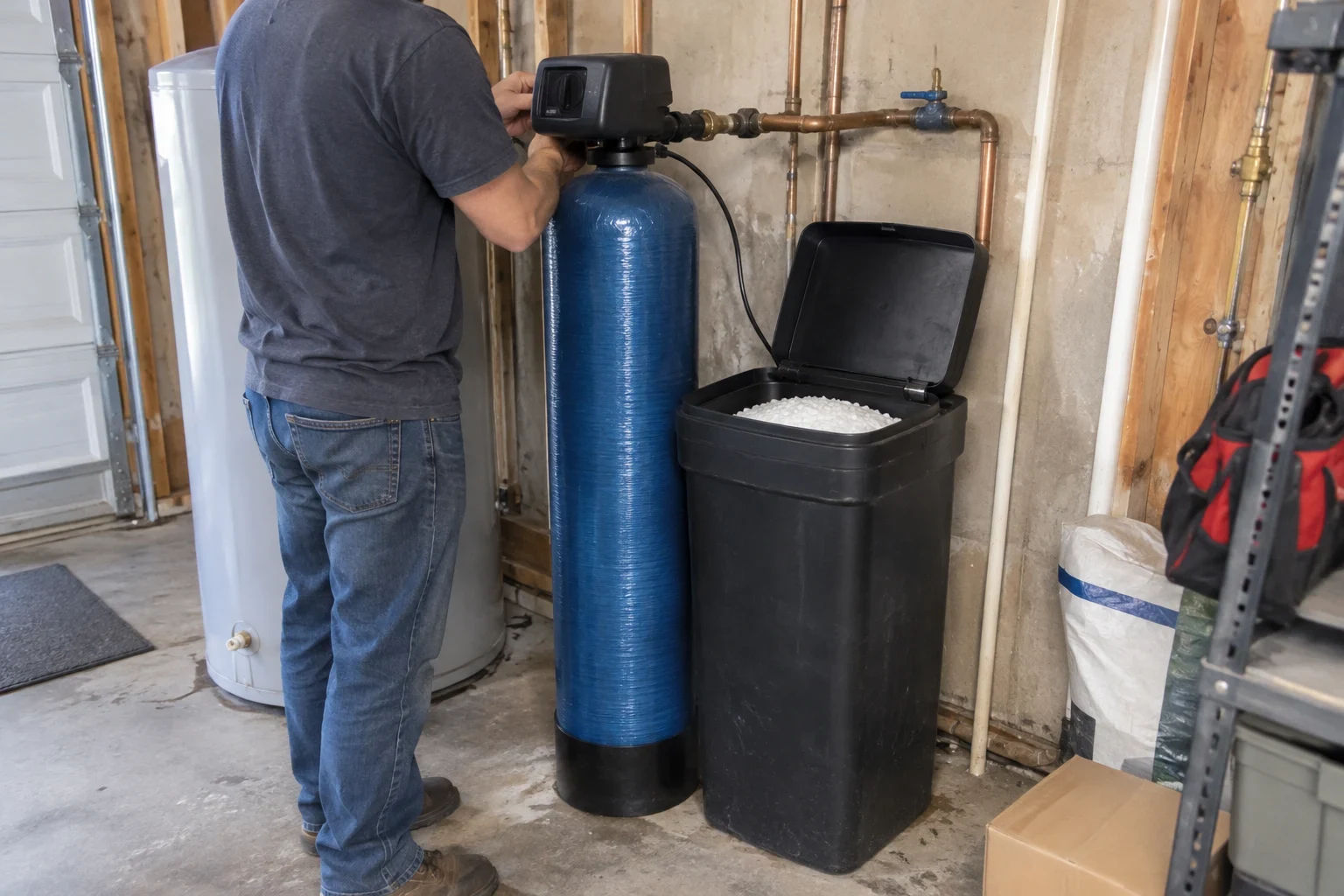
As water comes into your home, a softener passes it through a tank of resin beads. The beads grab the hardness minerals, calcium and magnesium, and give up a little sodium or potassium in return. When the resin is full, the unit rinses itself with brine and sends those minerals down the drain. You feel the difference when soap rinses off easily, dishes come out clear and the water heater stops collecting scale.
Older houses usually come with a history. Galvanized lines can be narrowed by years of buildup, and a softener installed long ago may be too small, worn out or piped so it also feeds the outdoor spigots. We look at all of it before we suggest anything.
A softener handles hardness. If what bothers you is taste, smell or what ends up in your drinking water, that is a different job, and our reverse osmosis and whole-home filtration pages explain those options. We'll give you a straight answer on which one fits your home.
What's included in a softener install
- A unit sized to your home
- We size the softener from three things: how many people live with you, how much water you go through in a day and how hard your water is. An oversized unit burns through salt, and an undersized one runs out of capacity before the day is done.
- A close look at your pipes
- Before we plan anything, we check what your pipes are made of, whether the main shutoff actually closes and whether an old softener loop is still in place. Older homes often have copper, galvanized and patched sections side by side, so we plan the connections around what's really there.
- Bypass valve and solid connections
- Every install comes with a bypass valve. One turn sends water past the softener, so your faucets and toilets still work if the unit ever needs service. If an old loop is rusted or weeping at a joint, we swap out that section rather than tie into it.
- Drain line with an air gap
- The rinse water from each regeneration runs to a drain through an air gap, a small break that stops wastewater from being pulled back toward the unit. If the drain is tucked in an awkward corner, we route the line cleanly and secure it so it stays put.
- Hauling off the old softener
- When a tired old unit is already in place, we disconnect it and take it away. You won't be left figuring out how to get rid of an empty tank.
- Programming and a quick lesson
- We set the regeneration schedule, fill the brine tank and show you where the salt goes and how to use the bypass. By the time we leave, you'll know what normal looks and sounds like.
Signs your home could use a softener
Chalky rings that keep coming back
A white, crusty edge on faucets and showerheads that shows up again a few days after you scrub it is mineral scale building back.
Film on glasses after every wash
Cloudy or spotted glasses out of the dishwasher, even when you use rinse aid, usually point to hard water.
A water heater that crackles and pops
Hardness minerals drop out of the water and form a layer at the base of the tank. When the burner kicks on, that layer snaps and rumbles, the heater works harder to warm your water and it often wears out early.
Scratchy towels and tight skin
Hard water keeps soap from rinsing away completely, so towels come out stiff and your skin can feel dry after a shower.
An aging softener that's falling behind
If the salt level hasn't dropped in weeks, or the water feels hard again, the resin or control valve on an older unit has often reached the end of its life.
What moves the price of a softener
The biggest pieces of your price are the unit itself and how much your plumbing needs before it can take one. Older homes sometimes add a step or two, and each one appears as its own line on your quote. Your quote holds for 30 days, and you pay in full once the install is complete.
Capacity and valve type
More people in the house or harder water means more resin is needed. A metered valve, which regenerates based on the water you actually use, costs a little more up front and saves salt and water over time.
What the pipes look like
Connecting to sound copper goes quickly. Rusty galvanized pipe or a dripping old softener loop has to be replaced first, and that adds parts and time.
Where the drain and power are
The unit has to sit near a floor drain or laundry tub and a power outlet. When those are on the far side of the basement from the main line, extra piping and labor go into the job.
Taking out the old system
Disconnecting a previous softener, especially one with a stuck valve, and hauling it off adds a modest amount of labor.
What to expect on install day
- 1
Start with a phone call
Let us know what you've been seeing around the house and how many people live there. We'll put together a free quote and go over financing if you'd like that option.
- 2
Protect and shut down
We cover the floor where we'll be working, close the main valve and drain the lines. If that old main won't shut off all the way, you'll hear about it from us before any pipe gets cut.
- 3
Set the tanks and make connections
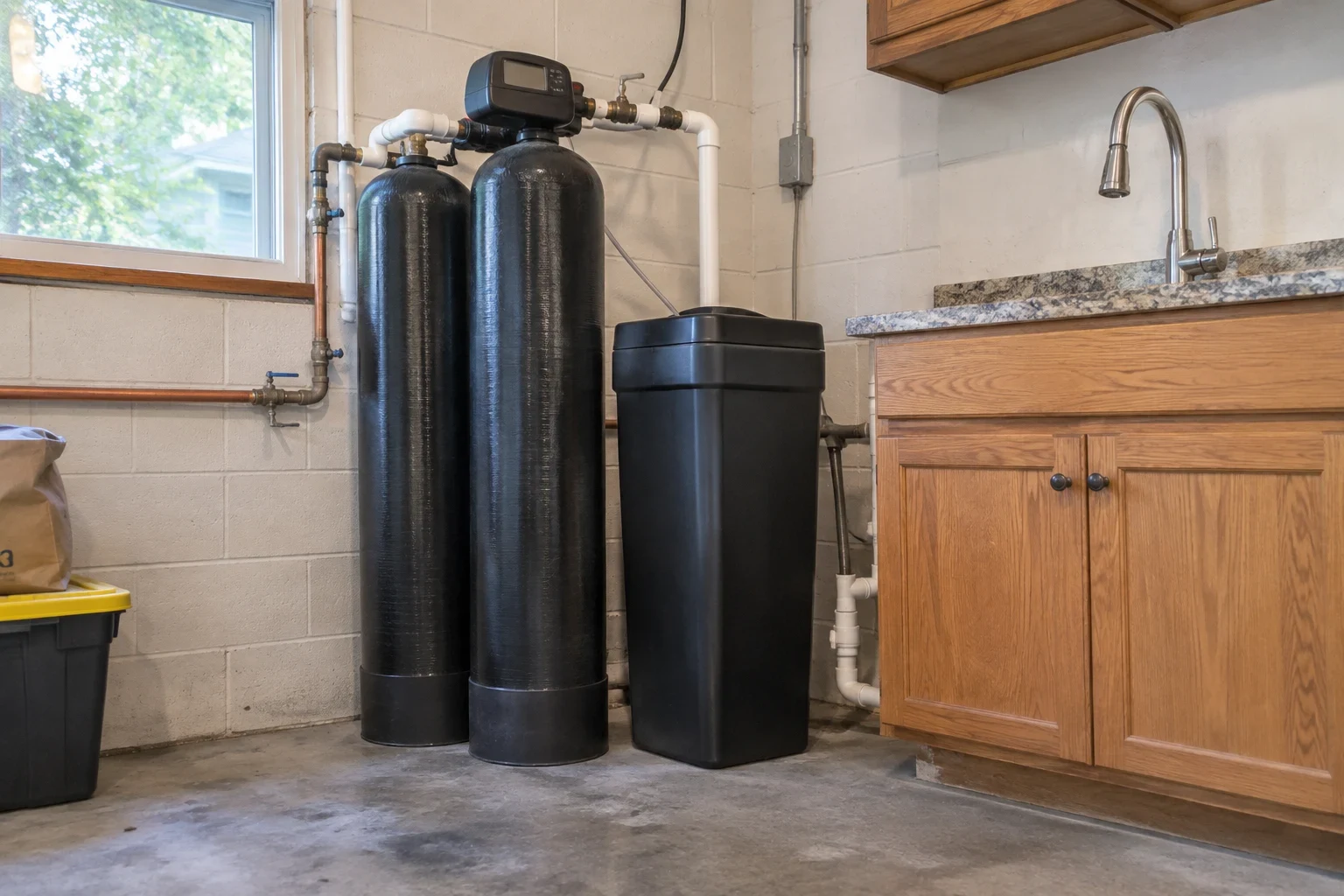
The tanks go in place, the bypass gets installed and the inlet and outlet are tied in. We run the drain line with its air gap and replace any rusted section we flagged on your quote.
- 4
Test, program and tidy up
Water comes back on, and we check each joint for drips. We run the first regeneration, set the timer, sweep up and load the old equipment into our truck.
Water softener questions
Can you reuse the plumbing loop from my old softener?
Often, yes, if the pipes and fittings are in good shape. In many older homes that loop has corroded or was patched over the years. We look at it first and only replace what needs replacing, and that choice shows on your quote.
Will soft water affect my outside spigots?
Most homes keep outdoor faucets on hard water, since there's no reason to spend salt on the lawn. If your current setup sends everything through the softener, we can usually separate those lines during the install.
How much salt will I go through?
It depends on your household size, how hard your water is and whether the valve is metered. A properly sized metered unit regenerates only when it needs to, which keeps salt use down. We'll explain what to expect for your home during the walkthrough.
Is financing available for a softener?
Yes. Financing is available through U.S. Bank Avvance, on approved credit. Ask on the phone and we'll walk you through how it works before you decide.
What if I change my mind after signing?
You have three business days to cancel after you sign. Payment isn't due until the install is finished, so you aren't paying up front for work that hasn't happened.
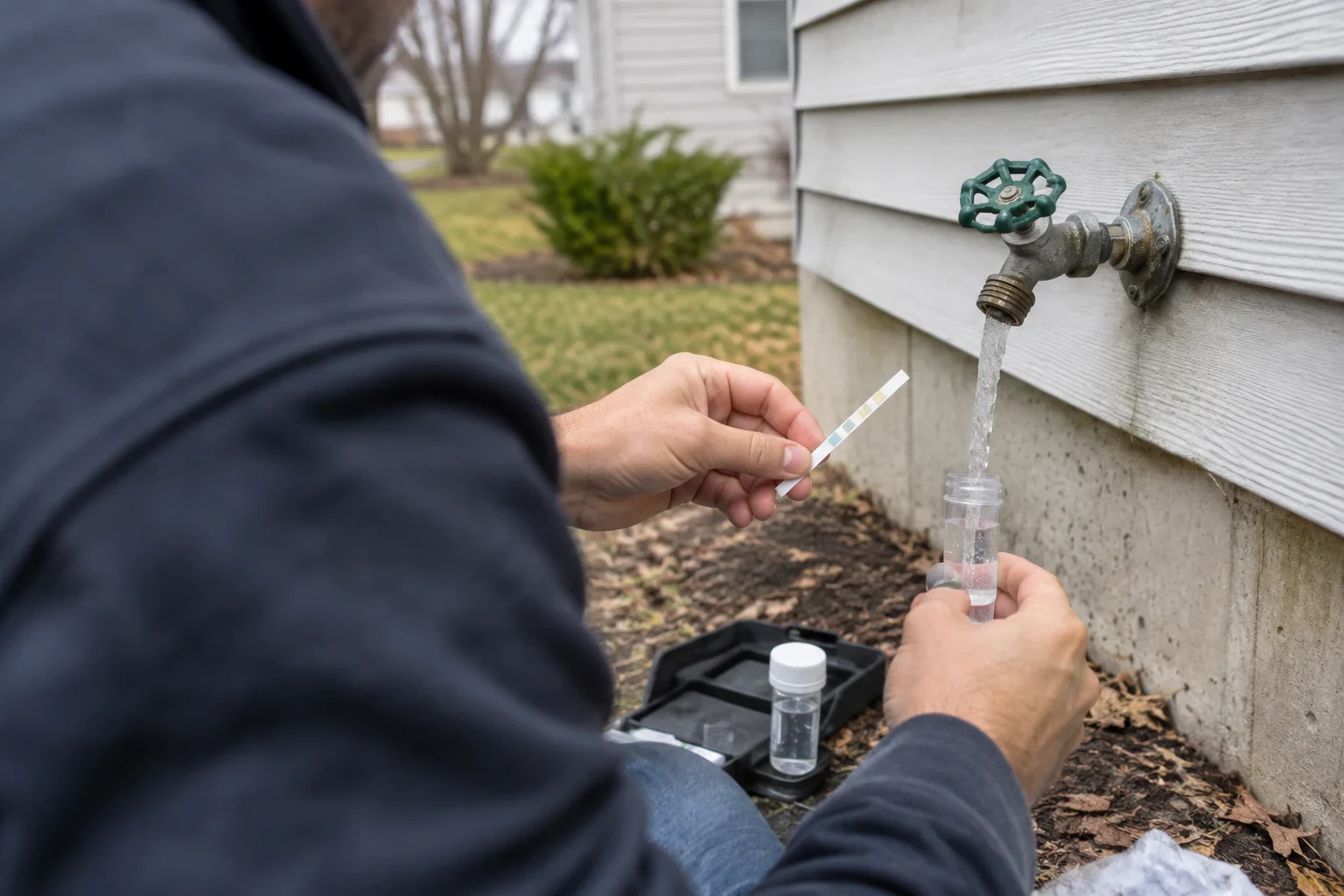
Does a softener make my water safe to drink?
A softener removes hardness minerals, not most contaminants. For cleaner drinking water, our reverse osmosis system under the kitchen sink is the better tool, and it can work alongside a softener.
Ready for softer water at home?
Tell us about your house and what you're seeing. We'll give you a free quote and walk you through financing, with no pressure to decide on the spot.