ServicesWhole-Home Filtration
Whole-Home Filtration in Pewaukee
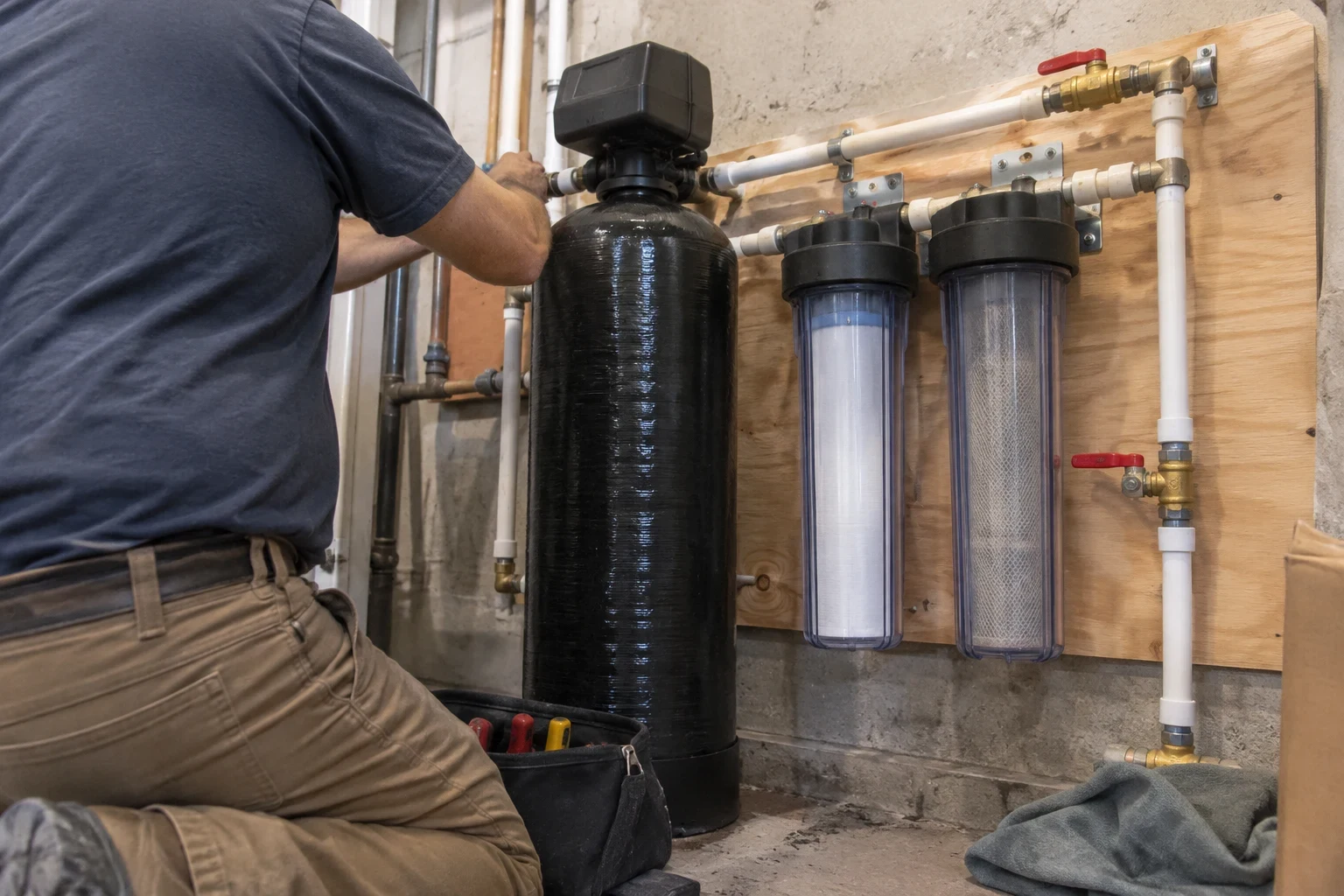
We fit a filtration system where water enters your home, so the kitchen tap, the showers and the washer all get cleaner water. We size it to your family's daily use and plan around the plumbing you already have, including worn shutoff valves and fixes a previous owner left behind.
What a whole-home filter does for your house
Most whole-home systems are carbon filters, often with a sediment stage ahead of them, installed on the main line after the water meter. They take out chlorine taste and smell, grit and fine particles before water reaches your water heater, faucets and appliances. You notice it first in the shower and in your morning coffee.
It's worth being clear about what a filter does not do. It won't soften hard water, and it won't fix rust that comes from corroding pipes inside your walls, since that rust is added after the filter. If hardness is your main complaint, a water softener is the better fit, and for drinking water held to a tighter standard, reverse osmosis at the kitchen sink pairs well with a whole-home filter.
Older homes add a few wrinkles. The spot where the main line enters is often crowded, the shutoff may be an old gate valve that no longer closes fully, and past owners may have mixed copper, galvanized steel and PEX. We plan around those details before install day, not during it.
What's included with your installation
A system sized to your water use
We match the filter to your household's flow so you don't feel a pressure drop when two showers run at once. Undersized filters are the most common reason people end up disappointed.
A new main shutoff if yours is worn
If the existing valve near the meter is an old gate valve that weeps or won't close, we tell you before we start. Replacing it means you can shut off water cleanly for every filter change afterward.
Bypass valve and clean connections
Every system goes in with a bypass so water keeps flowing if the filter ever needs service. Where we tie into galvanized or older copper, we use proper transition fittings so the joint lasts.
Grounding jumper across the filter
In many older houses the cold water pipe is part of the electrical grounding path. Cutting in a filter can break that path, so we add a bonding jumper across the new section.
Flush, leak check and a filter walkthrough
We flush the new media, check every joint under pressure and show you how and when to change cartridges. You'll know which part to buy and roughly how often.
Signs a whole-home filter could help
A chlorine smell when you shower
Warm water lets chlorine escape with the steam, so a closed bathroom can smell a bit like a pool. Treating water at the main line covers every shower in the house at once.
Sandy bits in screens and tanks
If faucet aerators keep clogging or fine sand collects at the bottom of a toilet tank, sediment is getting through. A sediment stage stops it before it wears on valves and appliance inlets.
Coffee and ice that taste like the tap
Filtering at the main improves the refrigerator line and the kitchen faucet together.
A filter in every room
Pitchers, shower-head cartridges and faucet attachments each need their own replacements. One system on the main line can retire most of them.
Plumbing with an unknown history
A house with mixed pipe types and repairs nobody wrote down gets cleaner water from the point of entry, which leaves less for the rest of the system to handle. Our visit also gives you a clear look at the main line and its valve.
What to expect from first call to final check
- 1
Start with a call
Tell us what you notice about your water and how many people live in your home. We'll also ask where your water comes from. A house on a private well usually calls for a different setup, and in that case we'd walk you through well water treatment instead.
- 2
A visit to see your main line
We come by and look over the meter area, the shutoff, the pipe material and any earlier patch jobs. Afterward you get a written quote listing the system plus any plumbing work it requires.
- 3
Installation
We cover the floor, shut the water off, then cut in the filter, its bypass and a bonding jumper. Your water is usually off for a few hours, and we give you the time window ahead of the visit.
- 4
Flush, check and tidy up
We run water through the new media, watch every joint under full pressure and clean the work area. Before we leave, we show you how the bypass works and how to change a filter.
What moves the price of a whole-home system
Two things drive most of your quote: the system you choose and the plumbing it ties into. We write out every line up front, and the quote holds for 30 days. Financing is available through U.S. Bank Avvance, on approved credit, and full payment is due at the completion of the install.
- Cartridge housing or tank-style unit
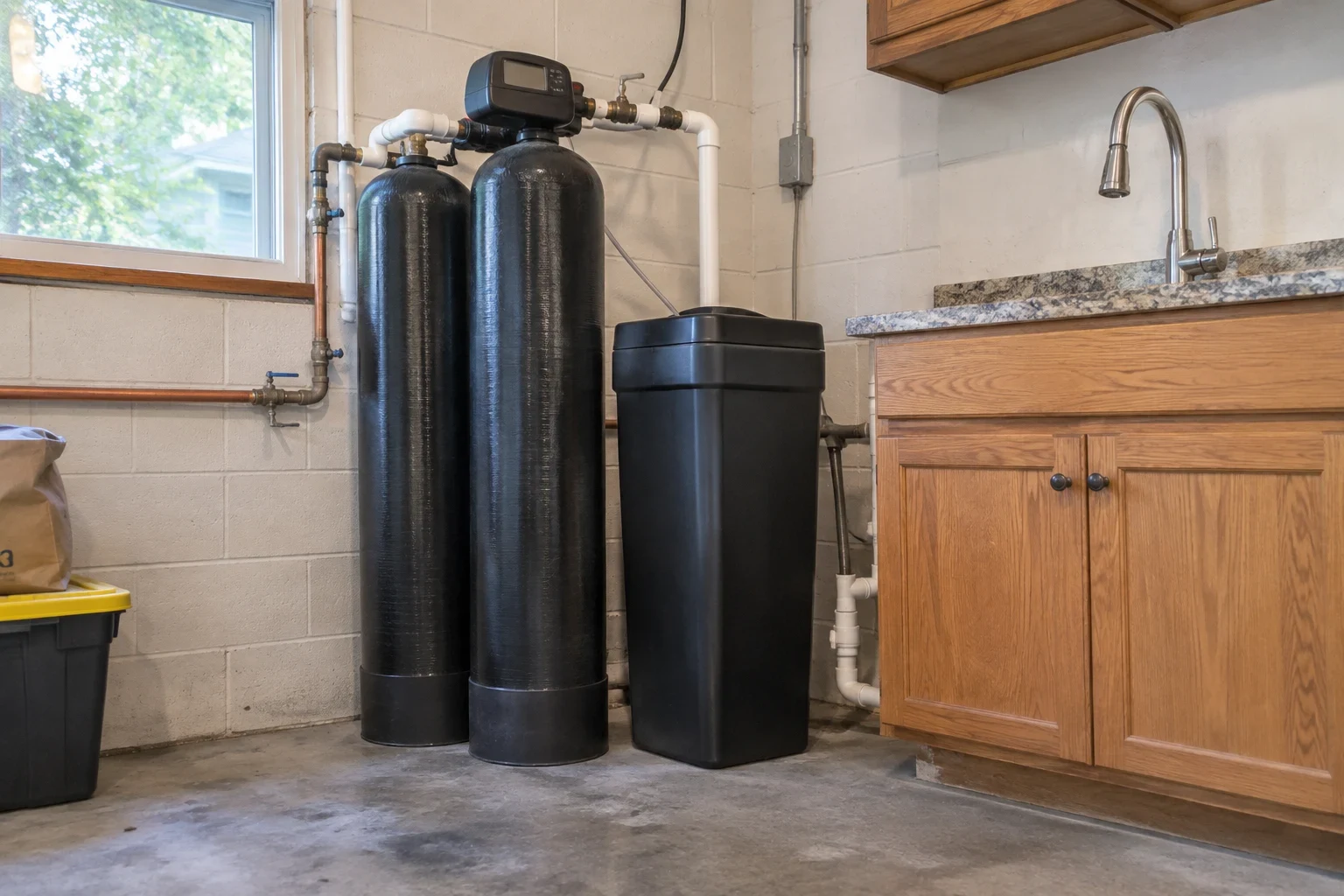
- Cartridge setups are the lower upfront choice, but they need fresh cartridges more often. Tank-style carbon units go much longer between service and sometimes need a drain close by.
- What the pipe near the meter looks like
- Rusted galvanized sections or a shutoff that no longer seals may have to be replaced before the filter goes in. We show you photos of what we find, and the decision stays yours.
- Room to work
- A finished basement, a cramped utility corner or a meter tucked behind drywall can call for extra pipe and more labor time.
- How many stages you need
- Some homes do well with one carbon filter. Others benefit from a separate sediment stage in front of it.
Questions about whole-home filtration
Something not covered here? (262) 955-8054
Will a filter on the main line make my water pressure weak?
Not when the filter is the right size. A noticeable drop usually means the unit is too small for the household or a cartridge has stayed in long past its interval. We look at how many people and bathrooms you have and pick a filter that keeps up when everyone is getting ready at once. We also explain when to swap filters so flow stays strong.
Will this soften my water as well?
No. Carbon and sediment media don't take out the calcium and magnesium behind hardness. If scale on fixtures or spotty dishes is the issue, a water softener is the tool for that, and both can go on the same line.
Is reverse osmosis still worth adding for drinking water?
Sometimes, but not always. The whole-home filter covers taste, odor and sediment everywhere in the house. Reverse osmosis treats water more thoroughly at a single tap, which some families like for drinking and cooking.
How often will I replace filters?
That varies with the type of system and how much water your family uses. Cartridges get swapped on a set schedule, while tank units go far longer between service. On install day we'll give you an interval that fits your setup and tell you which part to buy.
Can I back out after I sign?
Yes. You have three business days to cancel after you sign. We want you comfortable with the choice, not pressured into it.
Talk with us about better water at every tap
Share what you've been tasting, smelling or finding in your faucet screens, and we'll suggest a setup that suits your home and its plumbing. We're happy to explain financing before you make any decision.